





Holocene
Climate Change 2021 – The Physical Science Basis, Annex VII: Glossary, written by the Intergovernmental Panel on Climate Change (IPCC) and published by Cambridge University Press in 2023, defines Holocene as: ‘The current interglacial geological epoch, the second of two epochs within the Quaternary Period, the preceding being the Pleistocene. The International Commission on Stratigraphy (ICS) defines the start of the Holocene Epoch at 11,700 years before 2000 (Walker et al., 2019) spanning the interval from 11,700 yr to the present day. Together with the subadjacent Pleistocene, it comprises the Quaternary System/Period. The Holocene record contains diverse geomorphological, biological, climatological and archaeological evidence, within sequences that are often continuous and extremely well-preserved at decadal, annual and even seasonal resolution. As a consequence, the Holocene is perhaps the most intensively studied series/epoch within the entire Geological Time Scale. Yet until recently little attention had been paid to a formal subdivision of the Holocene. Here we describe an initiative by the Subcommission on Quaternary Stratigraphy (SQS. It encompasses the mid-Holocene (MH), the 1000-year-long interval centred at 6000 years before 1950; a period of long-standing focus for climate modelling, with enhanced seasonality in the Northern Hemisphere and decreased seasonality in the Southern Hemisphere. The early part of the Holocene is marked by the late stages of deglaciation of Pleistocene land ice, sea level rise, and the occurrence of warm phases that affected different regions at different times, often referred to as the ‘Holocene Thermal Maximum’. In addition, the epoch includes the post-glacial interval, which began approximately 7000 years ago when the fundamental features of the modern climate system were essentially in place, as the influence of remnant Pleistocene ice sheets waned.’
Deposit Modelling and Archaeology, Guidance for Mapping Buried Deposits, published by Historic England on 31 January 2020, suggests that ‘Holocene’ refers to: ‘The youngest part of the Quaternary period, encompassing the last 11,000 years of geological time. It is often referred to as the postglacial period.'
Green infrastructure and open environments: London’s foundations: protecting the geodiversity of the capital, Supplementary Planning Guidance, published by the Mayor of London in March 2012, defines Holocene as: ‘The youngest epoch of the Quaternary Sub-Era. Covers the last 11 800 years. Part of the Cenozoic Era. The concept of the Holocene ending at the end of the 18th Century is gaining ground, with the following Epoch termed the Anthropocene.’
[edit] Related articles on Designing Buildings Wiki
Featured articles
Check out some of the best features and news from Designing Buildings as well as key stories from around the web.

Building Safety Newsletter from MHCLG.
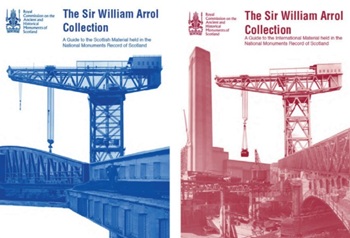
An extraordinary record of steel engineering worldwide.
Households living near new pylons to save on bills.

ECA warns growth must not outpace grid capacity or skills.
The role of the client and decision making

CIOB response to built environment professions call for evidence.
Construction's sustainability reporting revolution
Tracking upfront embodied carbon with digital tools.
ECA welcomes procurement reforms

Public spending must back British jobs and skills.
Campaigning for Edinburgh: the Cockburn Association 1875-2049

The role of the civic voice in protecting character. Book review.

CIOB photography competition is open for entries.
ECA Edmundson apprentice of the year award

Finalists announced.
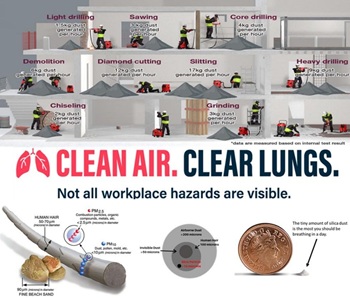
Major new study exposes serious knowledge gaps.
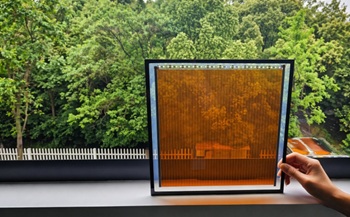
Generating energy from internal light as well as sunshine.